Gábor Pete

I'm an Associate Professor at the Department of Stochatics of the Mathematical Institute of the Technical University of Budapest, first with a 2-year EU grant, the Marie Curie International Incoming Fellowship.

My main interest is in probability, e.g. random walks and percolation on infinite graphs. I am interested in many things, usually in the interface of discrete and continuous mathematics: geometric group theory, conformal invariance of scaling limits, Schramm-Loewner Evolution, noise sensitivity, PDE, game theory, combinatorial number theory, ergodic Ramsey theory, quasicrystals, Morse theory.

I did my undergrad at the Bolyai Institute, Szeged, also spent a year at the University of Cambridge, England, and got my PhD from the Dept of Statistics at UC Berkeley in 2006, under the guidance of Yuval Peres. Then I was a postdoc at the Theory Group of Microsoft Research, working mainly with Oded Schramm (whom I miss dearly), then, in Fall 2008, a postdoc at MSRI, in the Ergodic Theory and Additive Combinatorics semester. Then I was a Coxeter Assistant Professor at the University of Toronto (Scarborough, St George), until July 2011.

For my contact info in Budapest, Szeged, click here.

Teaching, Spring 2012: Critical phenomena and conformal invariance in the plane and Stochastic Differential Equations (examples classes). Fall 2011: Valószínűségszámítás (Gyakorlat). Earlier teaching in Toronto: two grad courses, Percolation in the plane, Z^d, and beyond and Probability and Geometry on Groups, and an undergrad course on Cryptography and coding theory.

I am also a dancer, doing mainly improvisation. Here will be an explanation why I think that math and improv are so important. And here you can find some of my photos and drawings (quite old).

Mathematical contents: Research papers. Lecture notes: Probability and Geometry on Groups. Talk slides. Thesis works. Book reviews. Some classwork. Earlier geometry teaching and small papers in Hungarian. Homepages of my co-authors and favourite mathematicians. Some lecture notes I like. AIM workshop: Percolation on Transitive Graphs (May 2008). Eurandom YEP 2012 workshop: Two-dimensional statistical mechanics.


Research papers

These are informal advertisements for the papers. The official abstracts (and the papers, except my first one from 1998) can be found on the arXiv by clicking on the titles. And here are my papers according to Google Scholar.


Talk slides

YEP IX minicourse at Eurandom, 2012: 1. Noise and dynamical sensitivity in critical planar percolation 2. The scaling limits of dynamical and near-critical planar percolation 3. The near-critical planar FK-Ising model 4. How long do we have to wait for the exceptional, and what will it be like?

Percolation in the plane and random walks on expanders, or how long do we have to wait for the exceptional?, Technical University, Budapest, 2011.

The near-critical planar Ising Random Cluster model, colloquia at UCLA and the Rényi Institute, 2012.
Critical versus near-critical dynamics in the planar FK Ising model, Oberwolfach, 2011.

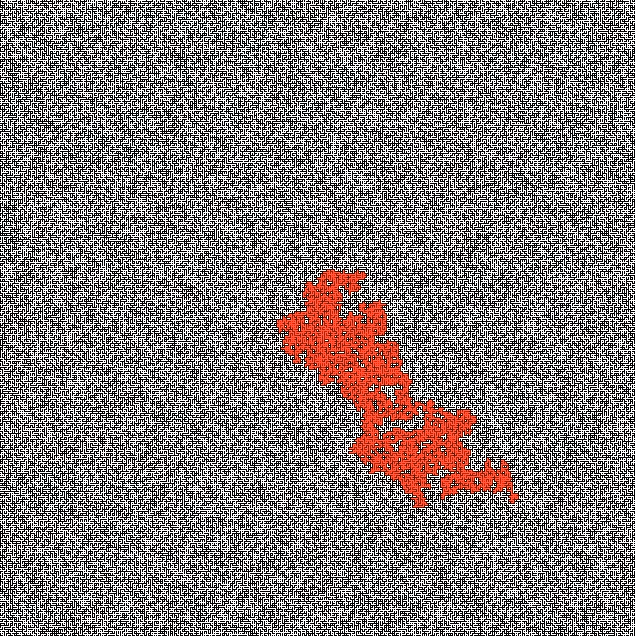
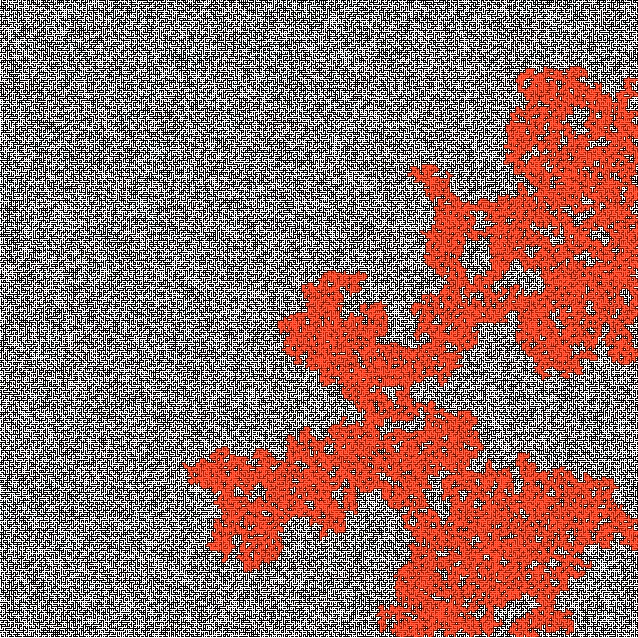
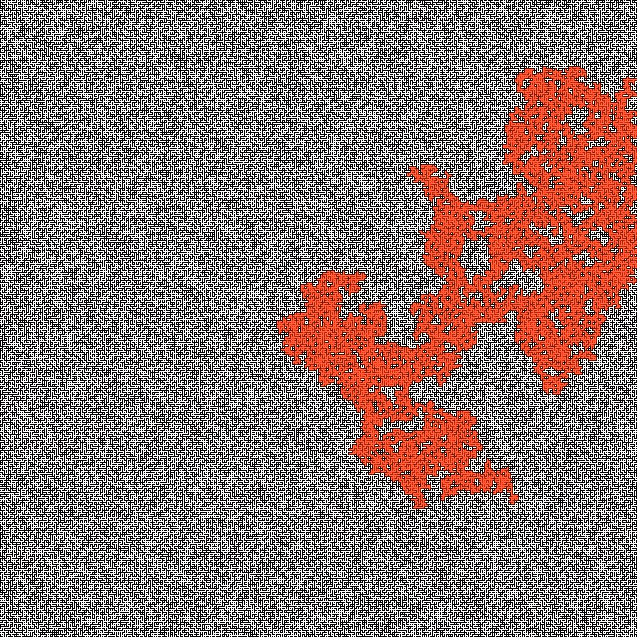
Dynamical Percolation Bond Movie, done with Mathematica, 2008.

The scaling limits of dynamical and near-critical planar percolation and the Minimal Spanning Tree, a mixture of talks at the Mittag-Leffler Institute, 2009, and ICMP Prague, 2009.

Noise sensitivity in critical percolation and what else might we learn from it (e.g., about the Fourier-Entropy-Influence conjecture), at the Metric Geometry, Algorithms, and Groups trimester at the Institut Henri Poincaré, Paris, 2011
How to prove tightness for the size of strange random sets? Based on [GPS 2008], Oded Schramm Memorial Conference, Microsoft Research, 2009.
The exact noise and dynamical sensitivity of critical percolation, via the Fourier spectrum, UBC Vancouver Colloquium, 2008.
Dynamical sensitivity of critical planar percolation, and the Incipient Infinite Cluster, AMS National Meeting, San Diego, 2008.

Random walks on percolation clusters, and scale-invariant groups, first at AMS Sectional Meeting, Vancouver, 2008, but this is now a newer version, at NYU Courant Institute, 2010.

Corner, trixor, odd-trixor, quaxor: Linear entropy planar percolation models without and with (conjectured) conformal invariance, IAS Park City Summer School, 2007.


Thesis works kor

My previous degrees (kind of Masters) are from the Bolyai Institute, University of Szeged, Hungary, and from the University of Cambridge, UK (this was the so-called Part III).


Book reviews for Acta Math. Sci. (Szeged)

H. Bass - A. Lubotzky: Tree lattices. B. Bollobás: Random graphs, 2nd edition. G. Davidoff - P. Sarnak - A. Valette: Elementary number theory, group theory, and Ramanujan graphs. G. Grimmett: Percolation, 2nd edition. E.Kleinert: Units in skew fields. W. Woess: Random walks on infinite graphs and groups


Some classwork 


In Hungarian

From courses I taught:

Small papers I wrote:


Homepages of my co-authors and favourite mathematicians

Noga Alon (algebraic and probabilistic combinatorics), Michael Baake (quasicrystals), József Balogh (graph theory and probability), Itai Benjamini (probability and metric geometry of groups), Vitaly Bergelson (ergodic Ramsey theory), Hugo Duminil-Copin (probability), György Elekes (combinatorial geometry), Benson Farb (geometric group theory), Christophe Garban (probability), Tim Gowers (combinatorics, number theory, Banach spaces), Péter Hajnal (combinatorics - former advisor in Szeged), Alan Hammond (probability), András Krámli (probability and stat. physics), Russell Lyons (probability), Péter Major (probability and Bolyai kollégium anno), John Milnor (geometry, complex dynamical systems, complexity), Elchanan Mossel (theoretical computer science, usually with probability or discrete Fourier analysis) Volodia Nekrashevych (self-similar groups, holomorphic dynamics), Tibor Ódor (geometry), Yuval Peres (probability theory, Hausdorff dimension - former advisor in Berkeley), Imre Ruzsa (combinatorial number theory), Oded Schramm (probability and conformal invariance),  Nándor Simányi (biliard dynamical systems),  Joel Spencer (probabilistic combinatorics), Terence Tao (harmonic analysis, combinatorics, PDE), Ádám Timár (probability), Bálint Tóth (probability and hydrodynamic limits),  Bálint Virág (probability),  Shmuel Weinberger (geometry, complexity), ...


Further links

Some lecture notes I like: